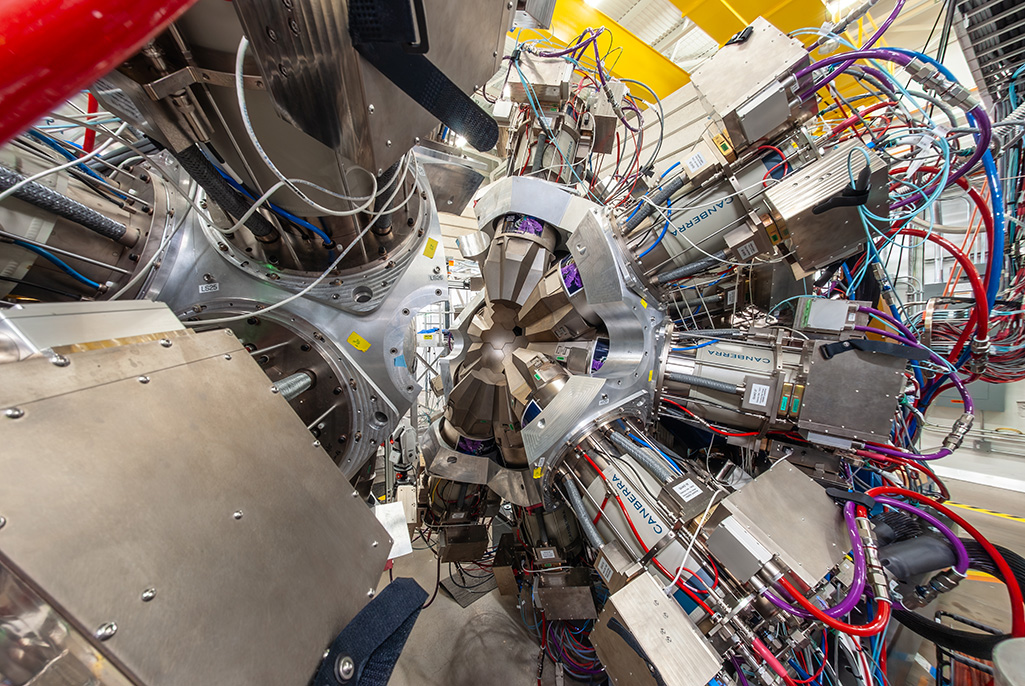
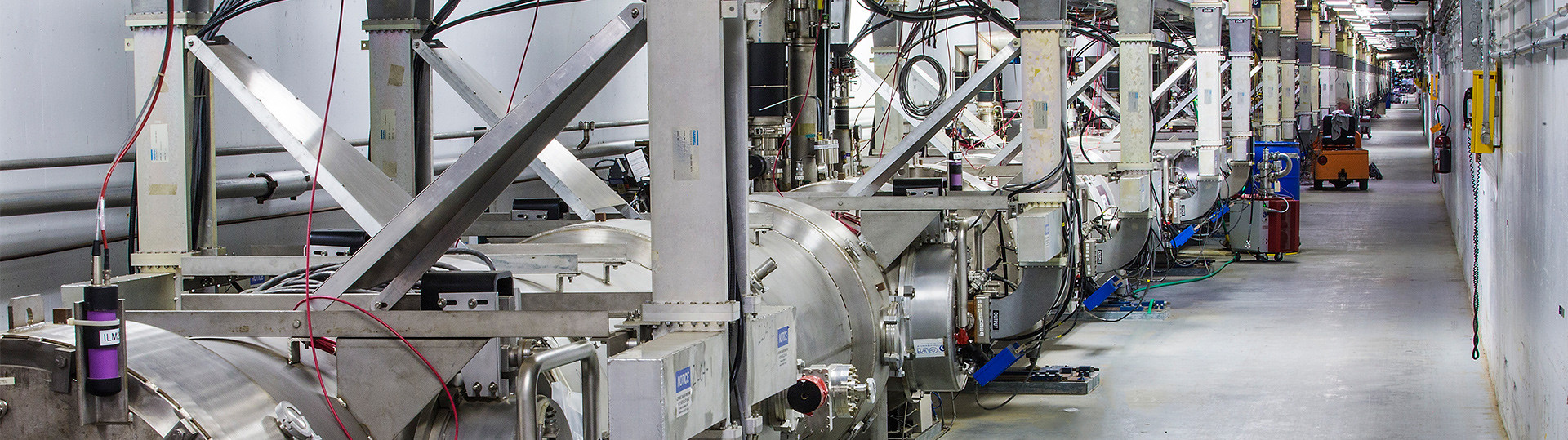
GRETA installed at Michigan State University’s Facility for Rare Isotope Beams. (Photo: Shumpei Noji/FRIB)
The Gamma-Ray Energy Tracking Array (GRETA), which is installed at the Facility for Rare Isotope Beams (FRIB) at Michigan State University, has successfully completed a commissioning and characterization run, establishing that it is ready for scientific operations.
According to Lawrence Berkeley National Laboratory, which made the announcement, the measurements that scientists make with GRETA will improve the theoretical models of the atomic nucleus that underpin research in nuclear physics, astrophysics, energy, medicine, and national security.
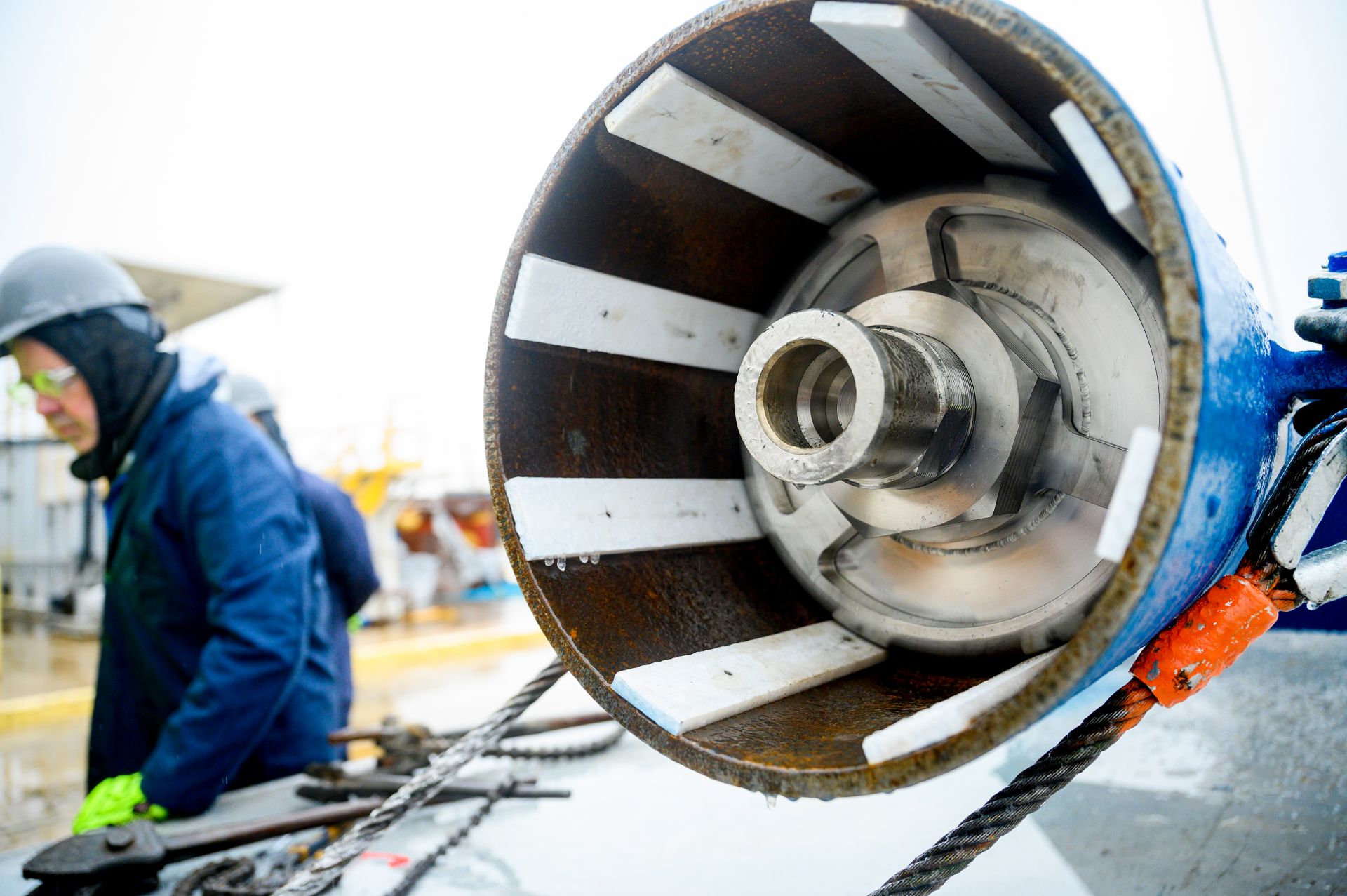
A prototype nuclear waste canister (not the UPWARDS UCS) sits in a drillhole receptacle during equipment field tests in 2023. (Photos courtesy of Deep Isolation)
When the Department of Energy’s Advanced Research Projects Agency–Energy launched the Optimizing Nuclear Waste and Advanced Reactor Disposal Systems (ONWARDS) program in 2022, it posed a challenge that the nuclear industry had never seriously confronted before: how to design waste management solutions that anticipate the coming shift to advanced reactors and not merely retrofit existing systems built for an older generation of technology. The program’s objectives were ambitious—reduce disposal footprint, enable scalable pathways for unfamiliar waste streams, and build the technical foundations for future disposal—yet also tightly grounded in the realities of emerging nuclear fuel cycles. For the nuclear community, this was a timely call. Advanced reactors were accelerating toward deployment, but the waste management systems needed to support them had not kept pace.
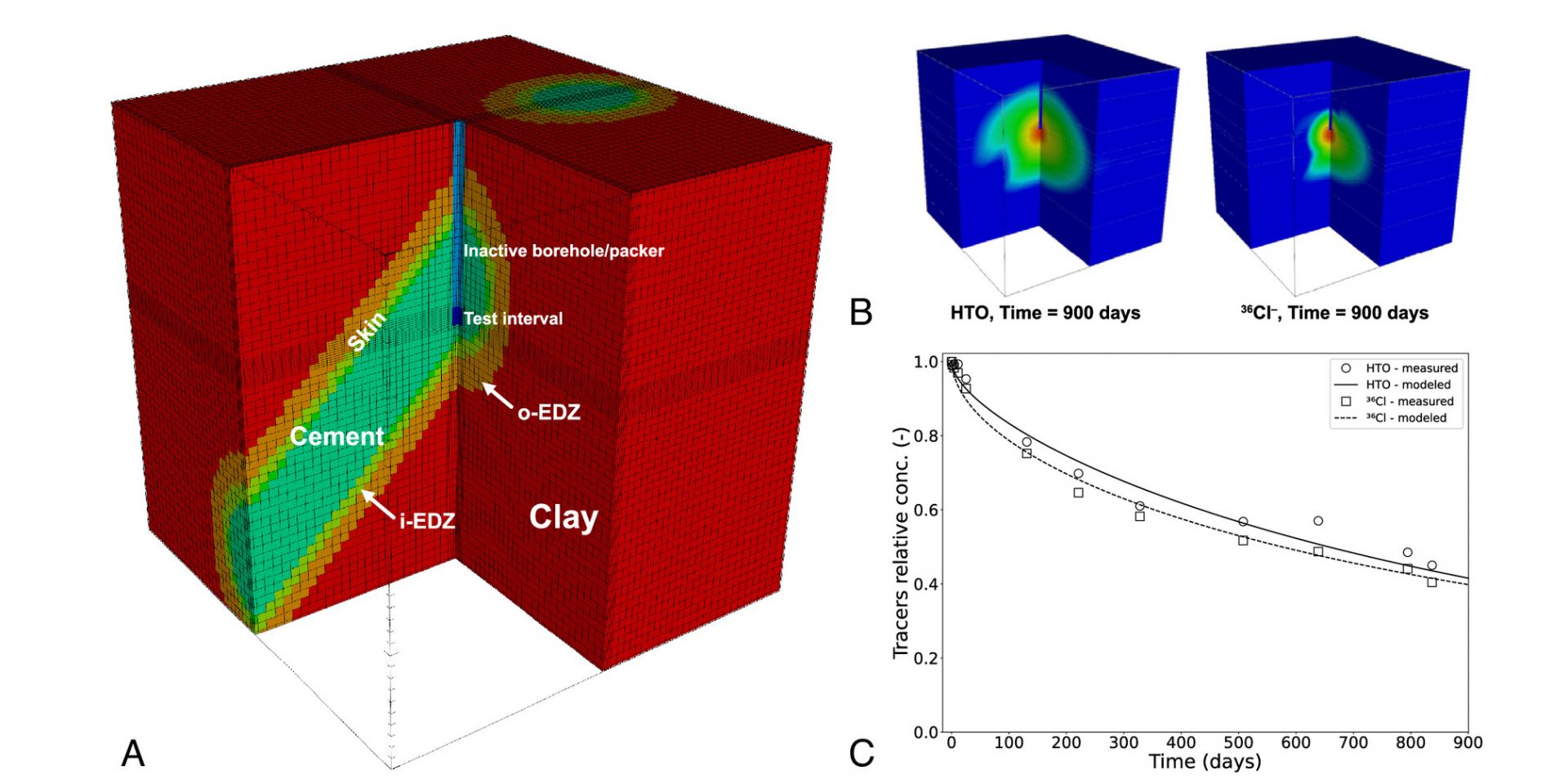
(A) Computational domain and material distribution used in the simulations. The domain is rotated so that the Opalinus Clay strata are vertical. (B) 3D contour plots of neutral uncharged tritiated water (left) and charged 36Cl− (right) solutes at 900 days. (C) Comparison of observed (symbols) and simulated (lines) borehole concentrations using the 3D model. (Image: Sarsenbayev et al.)
Researchers with the Massachusetts Institute of Technology, working with scientists from Lawrence Berkeley National Laboratory and the University of Orléans, have modeled radionuclide behavior in deep geologic formations, offering a tool for developing a defensible safety case for the underground disposal of radioactive waste.
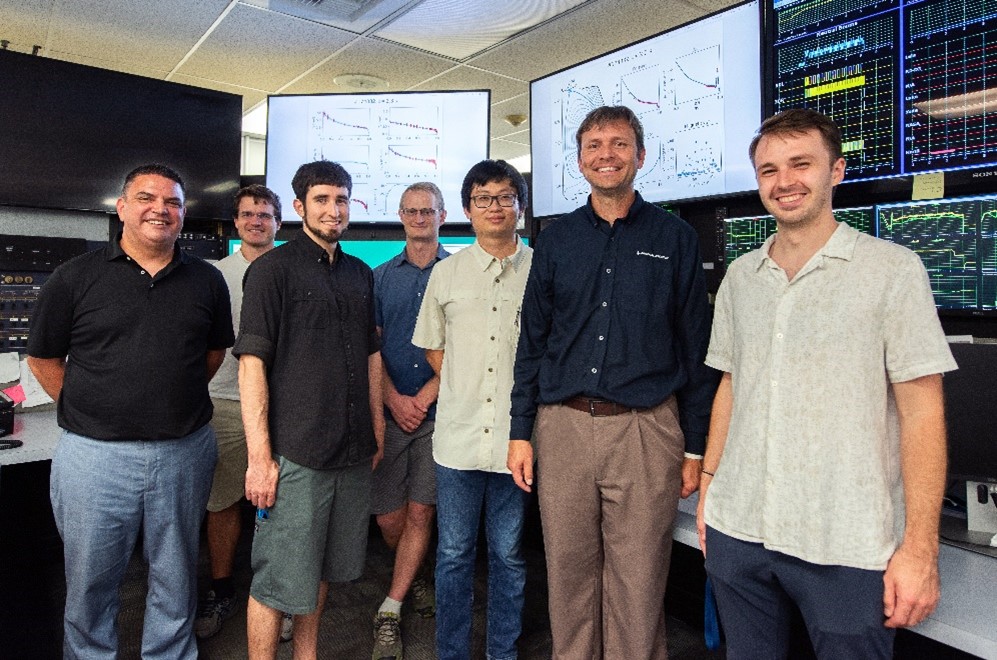
The DIII-D Superfacility team. (Photo: General Atomics)
Researchers at the DIII-D National Fusion Facility, the National Energy Research Scientific Computing Center (NERSC) at Lawrence Berkeley National Laboratory (LBNL), and the Energy Sciences Network (ESnet) are teaming up to make the high-performance computing (HPC) powers of NERSC available to DIII-D researchers through ESnet—a high-speed data network. Their collaboration, described in a May 29 news release, in effect boosts the computing power behind DIII-D’s diagnostic tools to make more data from fusion experiments available to researchers at DIII-D in San Diego and to the global fusion research community.
The Continuous Electron Beam Accelerator Facility at Jefferson Lab. (Source: Jefferson Lab)
Research with the Department of Energy’s Thomas Jefferson National Accelerator Facility (Jefferson Lab) has revealed new insights into short-range correlations—the brief pairings of nucleons (protons with neutrons, protons with protons, or neutrons with neutrons) in the nuclei of atoms. The study, published in Nature, used precision measurements to determine that short-range correlations differ depending on the density of the nucleus, that is, how many nucleons it contains.